Flamenco dates to the 18th century, although there are controversies about its origin, as none of these opinions have been proven. The influence of the gypsy people is commonly associated with this popular Andalusian culture.
The Gypsies arrived in Spain in the 15th century and settled in Andalusia. The origins of the gypsies are said to lie in the cultural mix of Andalusian natives, Muslims, and Castilians of the time.
Flamenco began in family and neighborhood gatherings. From its origin, flamenco is the medium through which the purest feelings of the person who performs it are expressed, hence the flamenco “palos”.
Flamenco is a musical genre that originated in Andalusia, Cadiz, Seville, Granada, Cordoba and in some areas of the Region of Murcia, Castilla la Mancha, and Extremadura.
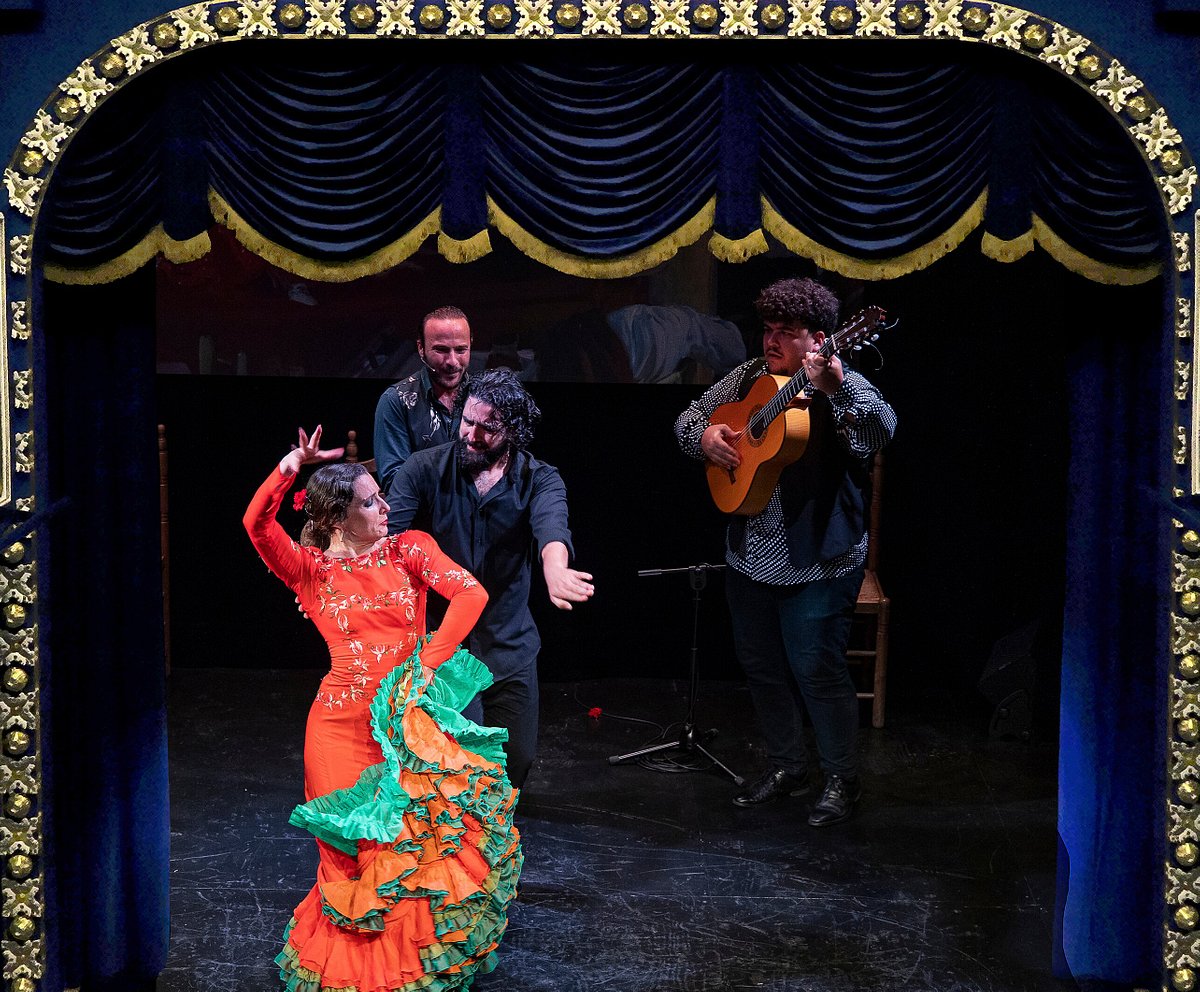
Its main facets are singing, guitar playing and dancing, all of which have their own traditions and rules. With the passing of time, this Art gained popularity and was perfected, being performed in theatres, “colmaos” and cafés, the prelude to the current flamenco “tablaos”.
Flamenco is considered a major Art because it is music, poetry, gesture, heart, song, and dance, it is technique, but with a pure and individual architecture of each one who expresses it in his own way, being this the so-called “art” of each one.
The artist is born an artist, he is not made, there are no techniques to be one.
Art is born from the stomach and the soul, and that makes each artist unique and unrepeatable. Flamenco is the most beautiful expression of feelings, and of what each one of us has inside.
Flamenco has been reflected throughout history in literature, theatre, cinema, music, and plastic arts.
Since flamenco has existed, the plastic expression has approached it in many ways, being this the main motif of many works, which have served as inspiration representing gestures, faces, expressions, clothing, and ornaments represented in unique moments that have been captured in time. In the paintings called “Costumbrismo Andaluz”.
In 2010 UNESCO declared Flamenco Intangible Cultural Heritage of Humanity. Seville is throughout the year an open stage dedicated to flamenco, not only for its countless tablaos, but also for the festivals, events and activities that take place related to this genuine art.
One of the best known is the Seville Flamenco Biennial.
Flamenco singing is one of its three main components, together with guitar playing and dancing. Normally, it is performed alone, with very expressive phrases and gestures. Spain, and Andalusia in particular, boasts Phenomenal Artists of this major art form.
THE FLAMENCO BIENNIAL
The Bienal de Flamenco is a flamenco festival held in Seville, every two years in different emblematic places
This festival serves as a showcase for bailaores, cantaores and guitarists from the world of flamenco, whether they are young talents or top figures, representing both pure flamenco and new trends in the world of flamenco.
The Biennial was held for the first time in 1980. In the first edition, the director was Mr. José Luis Ortiz, and the publicity was done with a poster designed by Mr. Joaquín Saenz.
Since 2014, the Biennial has been associated with the Biennial of Flamenco Art of Paris, which takes place every two years at the Parisian theatre of Chaillot, with the aim of “developing joint projects (including production support) and leading an open debate on flamenco beyond Spanish borders”, according to its director.
The birthplace of Flamenco, is called Andalusia…
Image Painting: Image Painting: “Pepita la gitana and her daughter” Joaquin Sorolla