It is known to have existed since the 14th century, although more precisely since the 16th century. It was at this time that it developed greatly throughout Andalusia, but especially in Seville due to its port, as an entrance and exit to the Indies. Houses with blind alleys with a single entrance, more properly in the Mozarabic curralaz. These corrals, before being common dwellings and courtyards for neighbors, were manor houses of the time and were abandoned by their owners. These constructions were used and readapted by humble families.
The corrales de vecinos were born as an economic and cultural response to an epidemic lack of housing in Andalusian towns and villages.
The corrales de vecinos became the most representative typical housing that corresponded to the “poor people”. Workers lived there and many others had their own business there.
Most of these houses consisted of a large inner courtyard, with a fountain or cesspit in the centre. Around the courtyard there were several corridors, and each corridor had a multitude of doors to rooms or rooms that constituted the dwellings of the neighbours, which could consist of one or two rooms.
These “dwelling” rooms lacked a kitchen, laundry and bathroom, these services were collective and had to be shared by all the neighbours in turn.
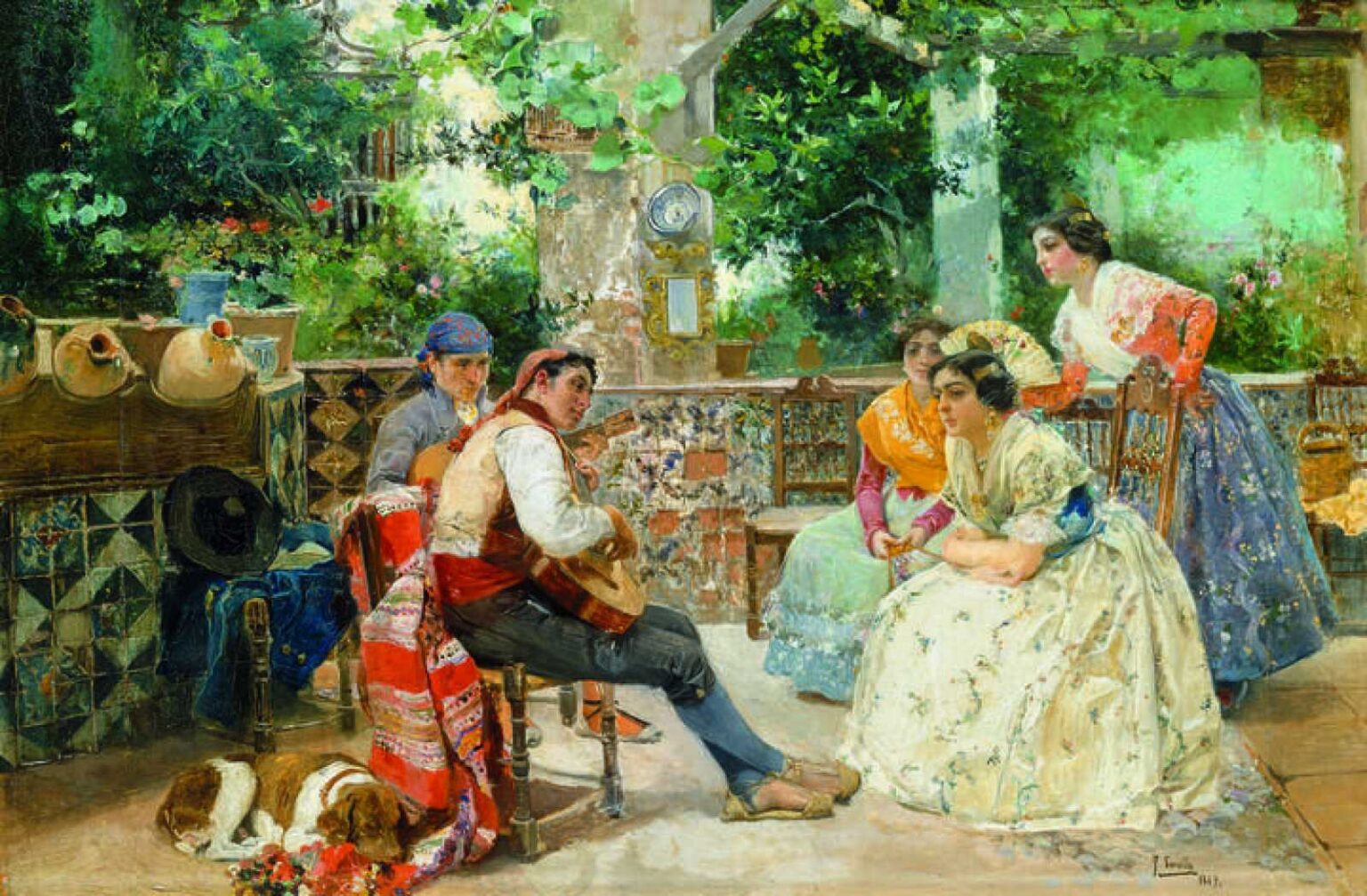
The daily life of the neighbours’ corral revolved around the courtyard, which was the neuralgic and geographical centre of the group of neighbours. The courtyard housed social responses to the needs of its neighbours, witnessing everything that took place in it.
Everything happened in these courtyards, baptism celebrations, criticisms, reprimands, mothers arguing about their children, birthdays, May cross, piñata Sundays, patron saint festivals and even wakes. Always with the doors of their houses wide open, they shared their lives, their sorrows and their glories.
Throughout the 21st century the great majority of these corrals have been disappearing, mainly due to real estate speculation and changes in the way of life. Many of these buildings have been vacated, leaving most of them in a ruinous state, and others have been rehabilitated with the aim of converting them into short-stay flats. At present, it is in the old quarter and in the Triana neighbourhood that most of the corrales survive. However, it seems that economic interests and urban construction uniformity have decreed the death of the Sevillian corrales.
Existing corral houses
Corral del Conde: in calle Santiago 27, it was one of the most important in the city, it has three openings and a large courtyard that was used as a stage for bullfights. It was completely restored and was declared a national historic-artistic monument in 1980. It was owned by the Count-Duke of Olivares.
Corral del Coliseo: In Calle Alcázares, 5, 7 and 9. It was completely refurbished in 1976. Dating back to the 18th century, this corral was famous because it was the site of one of the city’s comedy theatres called “el coliseo”. After suffering several fires, part of the building was converted into a neighbours’ corral. It belonged to the Marquis of Torrenueva.
Farmhouses in Triana
Hotel Triana (Calle Clara de Jesús Montero, on the corner of Manuel Arellano) is a former three-storey hotel built for the 1929 Ibero-American Exposition and converted into a corral de vecinos. It has three floors and a u-shaped structure. It belongs to the Seville City Council and during the 1980s it was refurbished with the aim of providing accommodation for the traditional residents of Triana. Its courtyard is the venue for musical and artistic events in general. Countless editions of the Flamenco Biennial, the Corral de Comedias and the Pregones of our traditional Vela de Santiago and Santa Ana have been held here.
Corral de los Corchos, C/ Alfarería, 138, is a large two-storey building with a roof terrace built in 1940. Inside it has a courtyard with a central fountain and lanterns on the walls. It is called the corral de los corchos because most of its neighbours worked in the cork factory that used to be in the Charterhouse.
El Corral Largo, C/ Alfarería, 83-85-87. Its name comes from the long courtyard that this building boasts.
La Cerca Hermosa, C/ Alfarería, 32. This is one of the largest and most renowned corrals in Triana, dating from the 19th and early 20th centuries. It is a corral with independent buildings of one or two storeys. Unlike other corrals, this one keeps most of the owners in residence, so they take care of the space with greater precision, which has led them to win prizes and awards.
Corral de la encarnación: at Calle Pagés del Corro 128. It is named after the convent on which it was partially built and where in the 19th century the chapel of the Incarnation existed inside, registered in 1995 as a place of ethnological interest by the Junta de Andalucía.
Corral de la encarnación: at Calle Pagés del Corro 128. It is named after the convent on which it was partially built and where in the 19th century there was a chapel of the Incarnation inside, registered in 1995 as a place of ethnological interest by the Junta de Andalucía (Andalusian Regional Government).
La Casa de las Flores (House of Flowers): at 16 Calle Castilla, it is an authentic typical Triana corral, with outstanding ceramic altarpieces and tiles. It was built in 1903 and is one of the oldest corrals in Seville. It stands out for its deep decoration with flowerpots, walls, windows and a very wide entrance hall. Another peculiarity is that its back side overlooks the “Paseo de la O”. This corral has also been the setting for films detailing Sevillian costumbrismo.
Corral de San Jorge: located at Calle San Jorge 19, it is a large corral that was built at the beginning of the 20th century and after its reformation in 1929 it changed its original dimensions and was greatly altered. Nevertheless, it is of great beauty.
La casa quemada (burnt house): at 72 Purity Street, it is an old palace from the 17th century. It has carved beams with lacquerwork, marble columns and a blinded well in its centre. It became a neighbour’s courtyard throughout its history. This palace was founded by the Inquisitor Mayor de Torquemada, hence its name.
Corral de Herrera: at Calle Pagés del Corro 111, it was built in 1909. It is decorated in a typical Sevillian style with flowerpots, ceramics, wrought iron lamps, posters of popular festivals and two ceramic altarpieces, Santa Rosa de Lima on the ground floor and Our Lord of the Great Power on the upper floor.