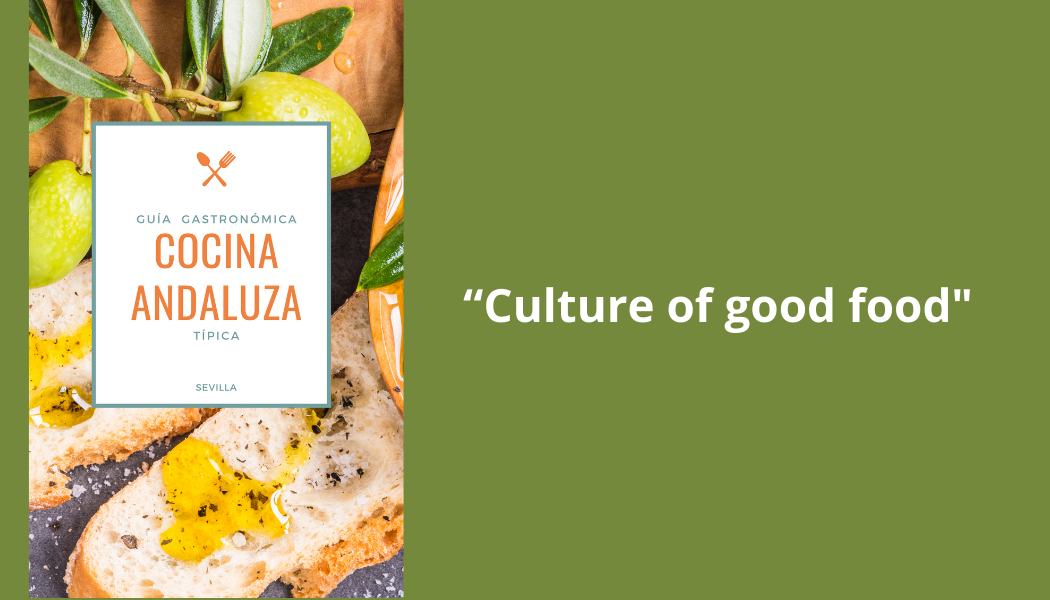
Are you planning to visit Seville?
Seville invites you to explore its cultural heritage and at the same time to taste its most typical dishes, usually in the form of delicious tapas. Seville is the golden mile of gastronomy and we are the perfect host for you, because we are Sevillians. We know our city very well and that is why we have created our own gastronomic guide of Seville. Where you will find the best options and typical places. In our guide you will find the most unknown places that you will not find in other guides. Seville has an impressive gastronomy, which you can enjoy through our famous “tapeo”. And that we will explain to you below.
Where does our culinary tradition come from?
Our culinary tradition is inherited from the extensive historical legacy left to us by the different cultures that settled in Seville, such as the Visigoths, Romans, Jews, Muslims and Christians. A great legacy of customs and flavours from East to West. Not forgetting the importation of products from America (known as overseas).
What is tapas in Seville?
Tapas in our city is a social act and one of the most deeply-rooted cultural characteristics. Seville is the culture of olive oil, wine, oranges, rice, bull’s meat, Iberian pork, river fish and convent sweets, but it is also a city with excellent 0 km products and local recipes with signature cuisine. In Seville, twelve o’clock is already considered aperitif time, and we love going to the Plaza del Salvador and having a beer or a manzanilla, and in winter, a glass of wine to warm up, for example, a vermouth or bulk wines that are delicious. In Seville there are establishments that are famous for the way they “pour” draught beer, true experts in the art of serving a cold beer. And as hunger comes quickly, we accompany it with a tapas. We have a great variety, and it is difficult to choose, so we go from bar to bar and enjoy each establishment and its own menu and specialities. If there is one thing that Seville has, it is its good climate, which allows you to live and enjoy the street, walk, play sports, sunbathe, read in a park and of course eat outdoors. This custom is our way of life, and it is very common to meet up with family or friends to have a drink and chat, and enjoy a good drink or meal in the company of our friends and family.
What are the meal times in Seville?
In Seville, meal times are later, as the days are longer. Breakfast is usually eaten between 8:00 and 10:00, which is when the city’s commercial activity begins. Therefore, cafés extend breakfast hours until 11:00 am. Lunch is the main meal of the day, and is usually taken between 14:00 and 15:30. Dinner is usually between 21:00 and 22:30h.
What are the typical places for tapas in Seville?
The Abacerías:
The origin of the concept of abacería dates back to the Muslim era. It was then when the term (abad) began to be used to refer to those people dedicated to the production of flour products. Centuries later, this concept would give rise to establishments-abacerías called tiendas-bars dedicated to the sale of basic necessities (also known as ultramarinos). In the past, these were shops where oil, vinegar, wine, dried vegetables, cod, sardines, etc. were sold in bulk. Nowadays, many of these shops are now catering establishments where you can eat and have tapas, and some of them still sell bread, sausages, tinned meats, vegetables, salted and pickled vegetables. However, this concept has faded from the original over the years, although fortunately nowadays there are several establishments where you can enjoy these mythical places in the city.
Las Tabernas or Bodeguitas
The Tabernas and bodeguitas are typical places, most of them centenary, where historically drinks were consumed. They were usually decorated with bulls. Nowadays, you can taste our most traditional cuisine in them. In taverns, the bar is a fundamental part of the tapas.
What are the most popular tapas among Sevillians?
The Montaíto: it is a small bread roll, with a hot or cold filling. The classics are the pringá, a mixture of meat and pork from the stew. Prawns with aioli, sirloin steak with whisky, canutera mackerel and sweet pepper, or loin of pork in sherry? One of the best options to whet your appetite at any time of the day.
Carrillada: typical Iberian pork or veal dish, prepared with wine and multiple spices. It has a smooth texture, but is super tasty, and is served hot.
Las Papas aliña: It is mainly composed of potatoes, oil, onion and vinegar, although each bar usually gives it its own special touch. It is a dish that is served cold, very appetising in summer.
El Papelón: a piece of brown paper on which sausages are usually served. It is very common in bakeries and some classic establishments.
El adobo: is the immersion of a food in a preparation with different components (such as paprika, oregano, salt, garlic and vinegar) before its consumption, it is a dish that is served fried. In Seville, cazón en adobo (marinated dogfish) is very typical.
Fried ‘pescaíto frito’ in Seville
Origin: “pescaíto frito” has Sephardic-Jewish origins, who accompanied the fish with herbal vinaigrettes. It is also known that the Romans used to fry fish. Marinated fish, cod, squid and fried prawns are common on practically all the city’s menus, where you will also find traditional fried fish restaurants where you can try “papelones de pescado” (fish fritters).
The day of the pescaíto Frito (fried fish)
La noche del pescaíto: is celebrated on the first night of the Feria de Abril, the spring festival. With the pescaíto dinner, the Seville fair is officially inaugurated. It is a preferential dinner which is only attended by the members of the “casetas”. It is held just before the Alumbrao, which is the lighting of the façade and the streets of the fairgrounds at 00:00h.
Las Pavías: fried or battered fish in Seville has a great tradition. The pavía de merluza or pavía de bacalao is a crunchy delicacy and a very typical dish in the frying houses. As a curiosity, beer is used to make the batter.
Lenten cuisine: traditionally, during Lent, which is 40 days before the Friday of Sorrows. Sevillian kitchens adapt their recipes to those of the time of religious abstinence, when not eating meat was fundamental. This resulted in some specialities that have become authentic references of our gastronomy in Seville. Such as spinach with chickpeas, dressings and all dishes related to cod (fritters, stews, etc.). If you like cod, the best time to enjoy this fish in all its possible versions is undoubtedly during Holy Week in Seville.
Snails: in Seville, snails are usually served in small individual bowls or plates to share, accompanied by small glasses with the broth from their cooking. They are usually somewhat spicy. It is in the months of May and June when this speciality becomes the star of the Sevillian terraces. There are also cabrillas, a snail, but larger, served with a thicker and stronger sauce.
What are the types of Seville’s raw materials?
Olive oil: The olive tree, olive oil and olives are consubstantial to the history and culture of Seville, and form part of the material and symbolic heritage passed down from generation to generation since Antiquity. Nowadays, there is an important production of extra virgin olive oil, a raw material admired all over the world and known throughout the world as liquid gold. Equally important are the olives, in their many different forms: split, crushed or whole, stuffed with anchovies or peppers, etc. They can be gordales, manzanillas, verdiales or other varieties, and they can be green, black, purple, etc.
Wine: The cultivation of vines and the production of good wines are widespread throughout Seville. Specifically, in the province of Seville, there are three main wine-growing regions: Aljarafe, Sierra Norte and Guadalquivir-Doñana. It also has an enormous tradition in the production of eau-de-vie and liqueurs.
Oranges: The orange trees that you find in the city, which give their sweet smell in spring, have their use in both local and international cuisine. The love of the English for Seville’s bitter orange “marmalade” is well known. The production of sweet oranges is also important, Seville being one of the main producers in Spain. Almost 800,000,000 tonnes of oranges, mandarins and lemons a year. Please don’t get angry in Valencia. Bitter Orange.
Rice: Today Seville accounts for around 66% of Europe’s supply of the long grain rice market. This cereal is grown in the area around the Doñana National and Natural Park. And the Guadalquivir Marshes
Los Ibéricos: The region of the Sierra Norte de Sevilla is the ideal environment for the breeding of the Iberian pig, as well as for the production and curing of hams and other products derived from it. All of the highest quality. Protected Designation of Origin.
Convent sweets: In Seville, an exhibition of all the typical sweets made by the nuns of the city’s convents is held every year at the Real Alcázar during the feast of the Immaculate Conception. It is undoubtedly a pleasant experience, which we recommend you try. Also worth mentioning are the sweets such as almond or sweet potato yolks, citron or sweet potato pasties, tocinos de cielo, rosquitos, tortas de polvorón, buñuelos, torrijas and pestiños. These are all delicacies with centuries of tradition that are still made by hand in many convents in Seville. Many of these sweets have their own date of elaboration, as for example the torrijas and the pestiños during the Holy Week, is the date where the tradition is, the elaboration of torrijas and pestiños, in practically all the houses of the Sevillians. Mantecados and polvorones de Estepa are also very famous: products with the XVI Indication seal, they are the quintessential sweets of our Christmas.
What are the most popular neighbourhood in Seville?
El Arenal
This neighbourhood was a large open space located between the Triana gate of the old city walls and the Torre del Oro (Gold Tower). The area concentrated a large part of the city’s port activity. In the immediate vicinity was the medieval building of the Atarazanas, the city’s shipyard. The building, made up of a large group of warehouses, was later used in parts, from north to south, as an artillery depot, the church of San Jorge, the Hospital de la Caridad and the Customs House. Its naves were also used as the original headquarters of the Casa de Contratación de Indias, before it was moved to the Alcázar and, of course, it also housed port warehouses. The area occupied by the former Customs House now houses the headquarters of the AEAT (Spanish Tax Office). Industrial buildings and craft workshops, such as the ironworks and the Royal Mint, were located in the surrounding area. The city had been walled since Roman times. However, it was in the Almohad period that the complex of city walls became larger and more extensive, together with the presence of palaces close to the walls. This set of walls was followed by a row of defensive towers that stretched from the river to the Alcazar, including the Torre del Oro (Gold Tower), the Torre de la Plata (Silver Tower) and the Torre Abd el Aziz (Abd el Aziz Tower). Another enclave within the walled enclosure is the “postigo del Aceite”, through which it is said that fats entered the city. This Sevillian quarter is located in an area that has always been linked to the city’s port and which played a leading role in the period of trade with the Indies. Arenal Quarter.
Santa Cruz neighbourhood
Santa Cruz is a historic quarter of Seville (Andalusia, Spain) that sits on part of the old Jewish quarter of the city. The Jewish quarter occupied what is now the districts of Santa Cruz and San Bartolomé. From a municipal administrative point of view, the district extends over an area larger than that of the old Jewish quarter and covers the 37th and 43rd census sections of the city’s Old Town district. The district stands out as one of Seville’s major tourist attractions and forms part of the city’s most popular tourist routes. It is a paradigm of how an urban space has been influenced by the adaptation to the expectations of visitors. Santa Cruz neighbourhood.
Triana Market
The Triana Market is located in the heart of the Triana neighbourhood, just under the Isabel II Bridge (Triana Bridge), which connects Seville to one of its most popular neighbourhoods. Here you will find the most emblematic streets of the neighbourhood, which are Calle San Jacinto, Calle Betis, Calle Castilla and Calle Pureza. In addition, on the ground floor of this market are the remains of the Castle of San Jorge, the seat of the old Inquisitorial Court. This castle was the seat of the Inquisition from 1481. Its initial construction dates back to the Arab period and dates from 1171. This site is located in a strategic area of the period. This is where the ship that unloaded the people on the quay arrived to reach Seville and set sail from there. It is undoubtedly one of the most genuine places where you can enjoy a rich and varied gastronomic offer of traditional Andalusian food. As a curiosity, in this market you will find the CasaLa Teatro, a small theatre, which is probably the smallest in the world, with only 28 seats and 6 square metres of stage. You can also enjoy a delicious Gin and tonic in the Gintonería of our friends Marga and Juan Carlos, called (Donde Juan Caros) number 37. If you are a gin lover you will find here more than 80 different gins from all over the world. An ideal place to enjoy an emblematic snack.
The Alameda of Hercules
The Alameda de Hércules is an important alameda or public garden located in the historic centre of Seville, and due to its antiquity (1574) it is classified as the oldest public garden in Spain and Europe. The extensive garden of the Alameda de Hércules is the largest of the public spaces located within the old quarter of the city. It is located at the northern end of the walled city, close to the Guadalquivir River on one side and close to the Macarena district on the other. This garden was taken as a model by other cities on both sides of the Atlantic. The Alameda de San Pablo de Ecija (1578), the Alameda de los Descalzos in Lima (1611) and the Alameda Central in Mexico City (1592) were inspired by it. Alameda de Hércules neighbourhood.
What are the most popular markets in Seville?
Seville is fortunate to have several classic food markets. These markets are full of history and daily life. They are located in emblematic settings in Seville and you can also enjoy Sevillian cuisine and even cooking classes, live performances, theatre, tastings and other events. (Apparatus for describing the history of Triana and its parish church).
Triana Market
The Triana Market is located in the heart of the Triana neighbourhood, just under the Isabel II Bridge (Triana Bridge), which connects Seville to one of its most popular neighbourhoods. Here you will find the most emblematic streets of the neighbourhood, which are Calle San Jacinto, Calle Betis, Calle Castilla and Calle Pureza. In addition, on the ground floor of this market are the remains of the Castle of San Jorge, the seat of the old Inquisitorial Court. This castle was the seat of the Inquisition from 1481. Its initial construction dates back to the Arab period and dates from 1171. This site is located in a strategic area of the period. This is where the ship that unloaded the people on the quay arrived to reach Seville and set sail from there. It is undoubtedly one of the most genuine places where you can enjoy a rich and varied gastronomic offer of traditional Andalusian food. As a curiosity, in this market you will find the CasaLa Teatro, a small theatre, which is probably the smallest in the world, with only 28 seats and 6 square metres of stage. You can also enjoy a delicious Gin and tonic in the Gintonería of our friends Marga and Juan Carlos, called (Donde Juan Caros) number 37. If you are a gin lover you will find here more than 80 different gins from all over the world. An ideal place to enjoy an emblematic snack.
Arenal Market
The Arenal market is located in one of Seville’s neighbourhood. This neighbourhood is located in an area that has always been linked to the city’s port and which played a leading role in the era of trade with the Indies. This market was built in 1947, designed by the Sevillian architect Juan Talavera y Heredia. In this enclave you can find traditional stalls, such as recovas or fishmongers, as well as other more modern products such as organic products.
La Encarnación Market
Popularly known as “Las Setas”, this is one of the most modern food markets in the city and is located next to a Roman archaeological site. It is unique in the world. This market offers more than 40 stalls where you will find fresh and seasonal products. Fruit, vegetables, fish, seafood, meat and cold meats.
Feria Market
This market has been open since 1719 and is one of the oldest in Seville. In 1837, it was completely developed, occupying a palace. Next to the Church of Ómnium Sanctorum and the Palacio de los Marqueses de la Algaba, home to the Centro Mudéjar, it is a festive meeting place where you can enjoy tapas, live music performances, etc.
Lonja del Barranco Market
Its location is excellent, situated on the banks of the Guadalquivir river with more than 20 stalls with different culinary proposals. It also offers a large terrace where you can enjoy a panoramic view of the river.
Signed: Viépico Smart Tourism

¿Did you like this post?
Share it in: